Forthcoming · A Memoir by Dr. Ayonija Maheshwari
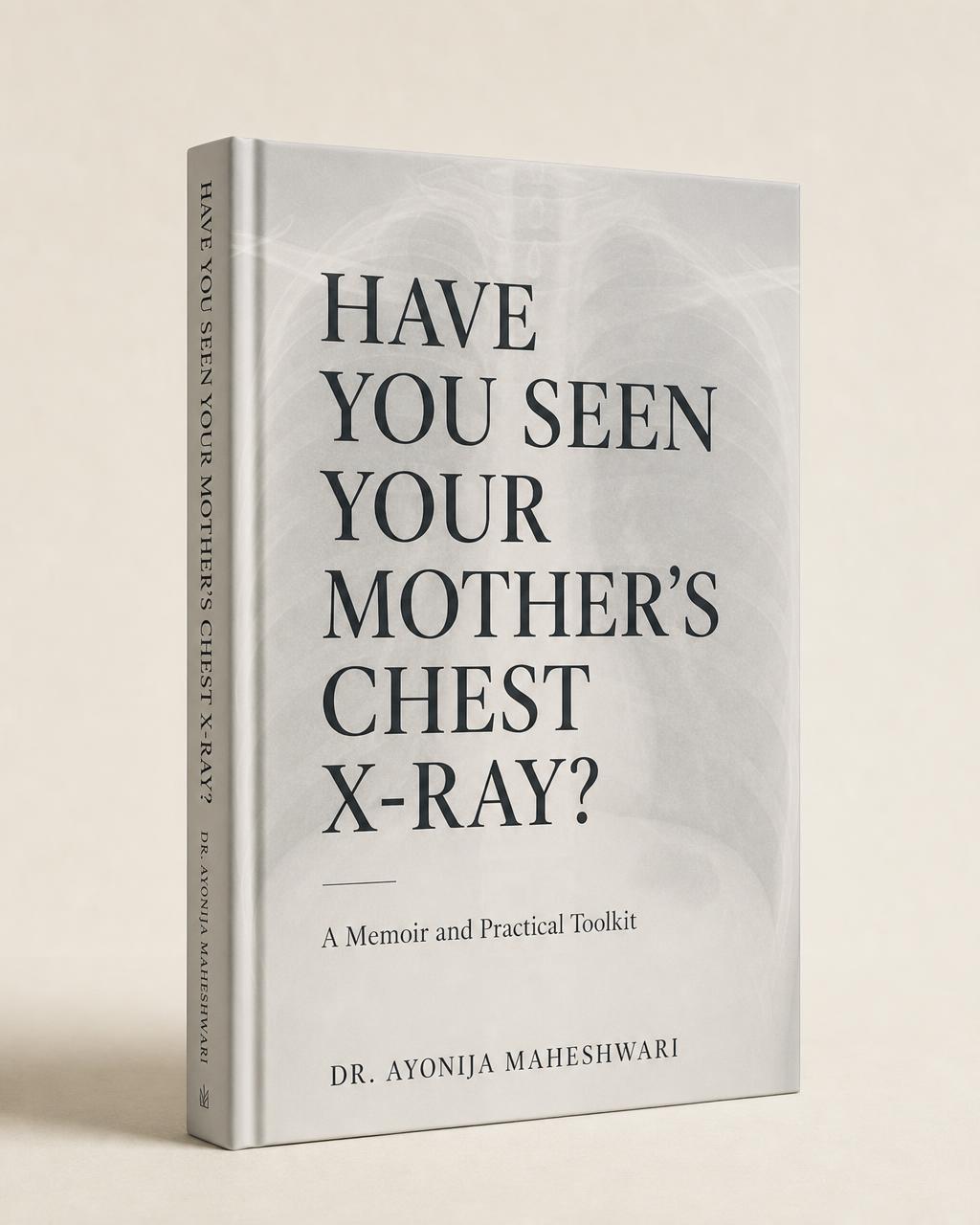
Have You Seen Your Mother's Chest X-Ray?From Both Sides of the Bedrail
“Wow. This is very powerful and well done. I think it will have a large impact.”
A memoir from seventy-one days inside the ICU — written for families navigating critical illness and for the clinicians who care for them.
Dr. Ayonija Maheshwari, MD, MPH, FANZCA — Anesthesiologist · ICU Physician · Founder, Humanize the ICU
Join the "Humanize the ICU" Community
From Both Sides of the Bedrail

"I am the doctor at the head of the bed, and the daughter holding the hand. The second role has taught me more about patient safety than all my medical training combined."
When Dr. Ayonija Maheshwari's mother underwent a life-saving heart transplant, it was followed by 71 grueling days in the ICU. Even within world-class medical institutions managed by exceptional teams, she witnessed firsthand how easily patients can slip through the cracks of preventable systemic harm.
Bringing care back to medicine.
Have You Seen Your Mother's Chest X-Ray? is a deeply personal memoir, written for two essential audiences:
For Families
A vital navigation roadmap for anyone sitting beside a hospital bed, feeling scared, unsure, and needing to fiercely advocate for a loved one.
For Clinicians
An urgent blueprint demonstrating how empathy is not a "soft goal" — it is a critical, underutilized safety strategy. Discover how thoughtfully deployed AI and digital integration can break institutional silos, foster collaboration, and give doctors back their true purpose: human connection.
Join the "Humanize the ICU" Community
The Story
Seventy-one days in the ICU, and a question no daughter should have to ask.
"Have you seen your mother's chest X-ray?" — a question asked in a corridor, that revealed how much no one had said out loud.
When her mother received a heart transplant and spent 71 days in intensive care, Dr. Maheshwari stood on both sides of the bed rail: the physician who knew the vocabulary, and the daughter who was terrified anyway. What she watched was not incompetence. The team was world-class. The equipment was excellent. The intent was good.
And still, her mother slipped toward preventable cracks — the ones that open between shifts, between specialties, between the chart and the human being attached to it. Handovers lost context. Decisions moved faster than explanations. The family, the one constant presence at the bedside, was treated as an audience rather than a safety net.
This book makes an argument the system keeps mistaking for sentiment: empathy is not a soft metric. It is a critical safety strategy. Communication failure is a clinical failure mode — and it is one we know how to fix.
Who This Book Is For
Written for two people, on either side of the same bed.
For Families
A navigation guide for the chair beside the bed.
For anyone sitting in an ICU feeling scared, unsure, and desperate to protect someone they love. Practical, unromantic guidance on what to ask, when to ask it, and how to be heard.
- —Questions that surface what the chart doesn't say
- —How to track the story across shift changes and specialties
- —Advocating without becoming 'the difficult family'
- —Understanding decisions, consent, and the pace of critical care
For Clinicians
An actionable vision against silos and burnout.
For teams who care deeply and are exhausted by systems that make caring harder. How thoughtful technology and human connection can dismantle silos rather than deepen them.
- —Treating communication as a measurable safety intervention
- —Designing handovers that carry context, not just data
- —Patient-centered AI and digital tools that return time to the bedside
- —Combating burnout by restoring meaning, not adding modules
A conversation before the first page
Your questions are welcome here.
About the story. About the physician and daughter behind it. About whether this memoir is for you.
Meet Dr. Maheshwari
Let’s start with what matters to you.
Frequently Asked